

Overview
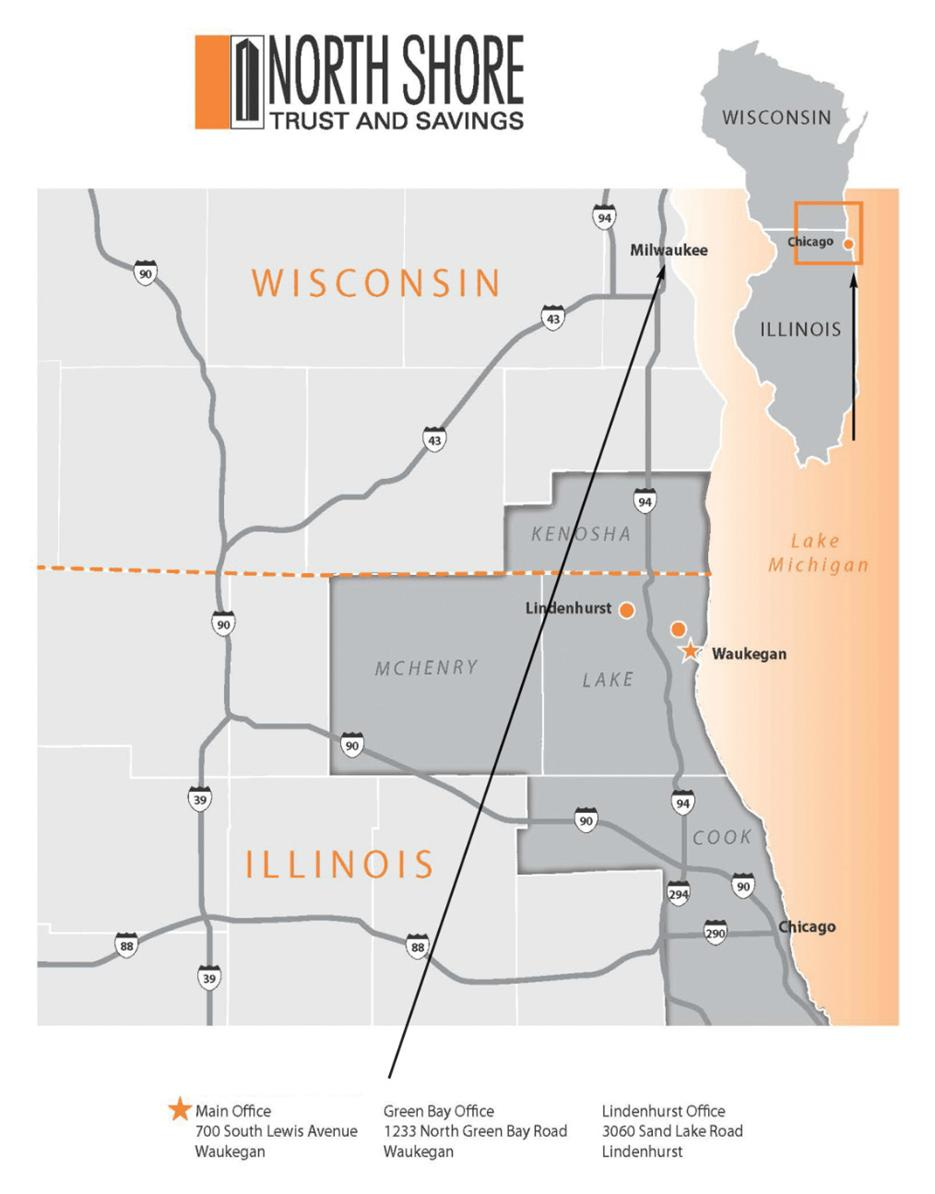
North Shore Trust and Savings (NSTS) is a small bank with three branches in Lake County, Illinois which is located just north of Chicago.
NSTS Bancorp is cheap, currently selling at less than 80% tangible book value. The bank converted from a mutual holding company to a publicly traded thrift in January 2022. While not currently profitable, NSTS Bancorp is overcapitalized, undervalued and could possibly be an acquisition target for a larger bank. This article will explore NSTS Bancorp’s loan portfolio, deposit base, characteristics that make NSTS Bancorp a possible acquisition target and a range of possible acquisition values based on recent bank acquisitions.
NSTS Bancorp’s Loan Portfolio has Less Exposure to Riskier Loans Compared to Other Regional Banks
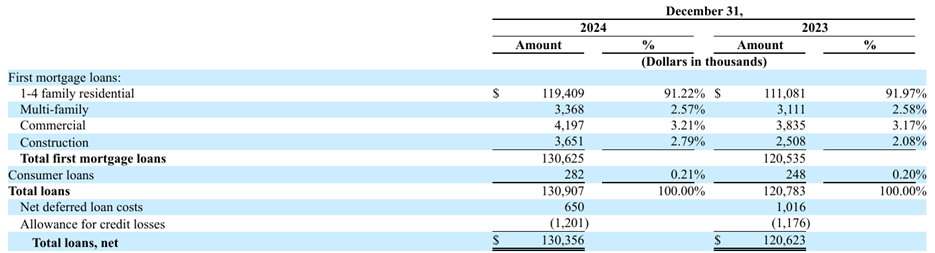
NSTS Bancorp’s main office is located in Waukegan, Illinois (about halfway between Chicago and Milwaukee). The bank mainly focuses on originating 1 - 4 family residential mortgages, which are the lowest risk loans for a bank when compared to multi-family, construction, commercial, and unsecured loans. Residential mortgages currently make up roughly 91% of NSTS’s total loan portfolio as of the most recent fiscal year ending December 31st, 2024.
NSTS Bancorp SEC Filings: 10-K
Residential mortgages are the least risky type of loan for a lender because they are secured by a residential property, and borrowers are typically required to put down at least 20% on a conforming loan. Borrowers putting less money down are required to have mortgage insurance and many of these high loan-to-value mortgages are guaranteed by Freddie Mac, Fannie Mae, and other government sponsored enterprises which reduces risk to the lender. Banks generate non-interest income by selling these mortgages in the secondary market.
NSTS Bancorp is not as exposed to riskier commercial/construction loans as other small regional banks. The riskier commercial/construction loans currently only make up about 6% of North Shore’s total loan portfolio.
NSTS Bancorp is overcapitalized and has an equity to assets ratio of 27.4%, which is one of the highest among regional banks. Most banks have equity to asset ratios below 10%. This high equity/asset ratio is both a blessing and a curse for NSTS Bancorp. The blessing is that NSTS has lower liquidity risks compared to other banks since it has a ton of equity. The curse is that because it is “under loaned” and overcapitalized, it has an inefficient capital structure - meaning it could be lending a lot more (loans currently make up only about 47% of NSTS’s assets), and generating higher interest income, return on equity and assets.
This is a typical situation for a recently converted thrift bank since these banks are essentially “flooded with cash” after the IPO. Thrift IPO investors are essentially seeing the bank’s net worth double after the thrift conversion, since the pre-converted mutual thrift bank was only owned by its depositors and did not have public shareholders pre-IPO.
NSTS Doesn’t Currently Have Any Non-Performing Loans as a Percentage of Total Assets
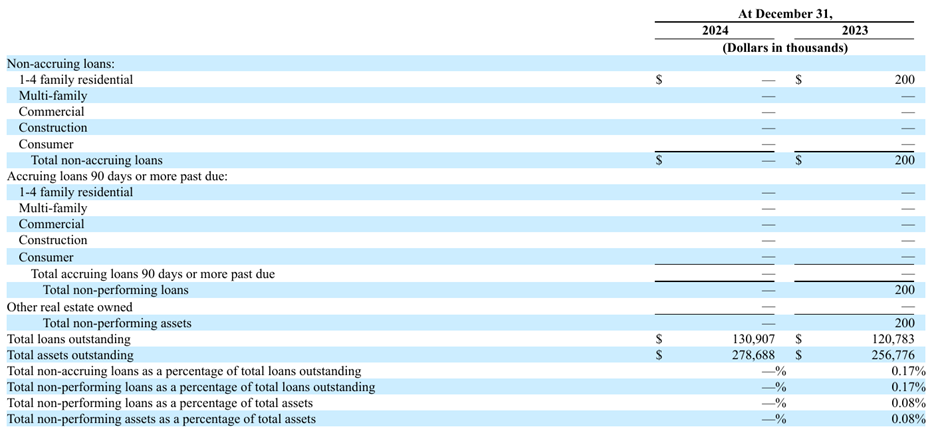
NSTS does not currently have any non-performing assets on its balance sheet. As of December 31, 2023, non-performing assets as a percentage of total assets were only 0.08% and the bank maintained a 588% allowance for credit losses as a percentage of non-performing loans. As previously stated, NSTS is primarily exposed to residential mortgages which tend to be the lowest risk loan for a bank.
NSTS Bancorp 10-K Filing
Deposit Base
Maintaining a low-cost deposit base makes a smaller bank an attractive acquisition target and obviously helps a bank to bolster profitability.
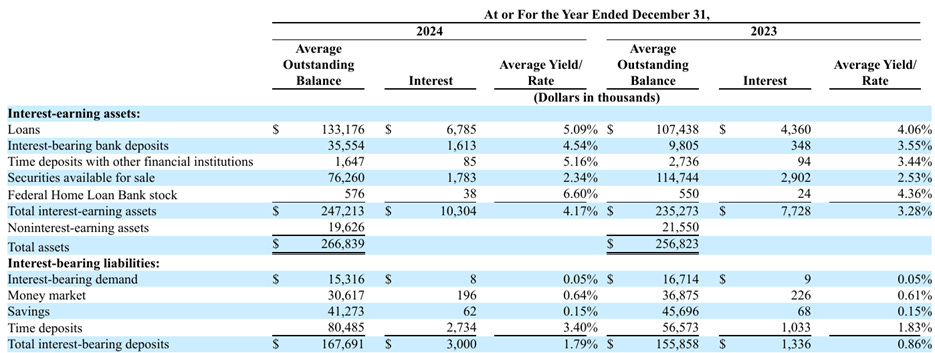
Banks that have a higher percentage of non-time deposits have a stickier, more attractive deposit base since non-time deposits are lower cost. Offering higher rate CD’s tend to attract less loyal customers who only want the highest rate and do not have a preference for a particular bank. As you can see from the chart below, NSTS’s total cost of interest-bearing deposits was 1.79% for the year ending December 31, 2024.
NSTS Bancorp 10-K
NSTS’s current loan to deposit ratio is about 69%, which is conservative for a regional bank. Typical loan to deposit ratios are between 80 - 90% and can be up to 100% or higher. NSTS Bancorp’s current interest rate spread (difference between the yield on average earning-assets and the cost of average interest-bearing liabilities) was 2.29% as of December 31st, 2024.
What Makes NSTS Bancorp an Attractive Acquisition Target?
In Analyzing and Investing in Community Banks, David Moore highlights 8 characteristics that make a bank an attractive acquisition target. These are:
Low-Cost Deposit Base
Large Average Branch Size
Branches Located in Close Proximity to One Another
Bank located in a Growing Geographic Region
Located in Upscale Geographic Region
High G&A Expenses
Undermarketed Customer Base
Large Number of Potential Acquirers
Deposit Base
NSTS’s non-time deposits have costs ranging from .05% to 0.64%. Non-time deposits make up about 52% of NSTS’s total deposit base. Non-interest-bearing deposits only make up about 6.28% of total deposits which isn’t great. Ideally bank investors like to see non-interest-bearing deposits make up at least 20% of total deposits.
Average Branch Size
NSTS’s has $177,824,000 in deposits and has 3 branches. This equates to an average deposit per branch ratio of roughly $63.4 million. According to TheFinancialBrand.com, bank branches need about $25 million to breakeven.
Branches Located in Close Proximity to One Another
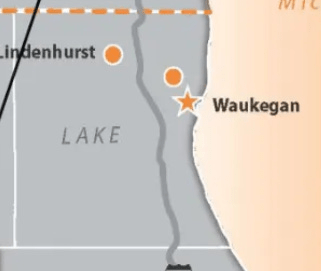
As you can see from the image below, NSTS’s branch locations are all located in close proximity to one another in Lake County, Illinois. This would likely make NSTS Bancorp more attractive to a potential acquirer.
Growing/Upscale Geographic Region
According to Feldman Financial Advisors, Inc. ‘s appraisal report in NSTS’s IPO prospectus, the median household income in Lake County, IL in 2021 was $92,588 which was about 37% higher than the median US household income of $67,761. In fact, Lake County had the highest per capita personal income of any county in the state of Illinois, according to the Federal Reserve Bank of St. Louis. Feldman’s report did state that the population growth for Lake County, IL had declined 1.4% from 2010 - 2021 so, while not a high-growth county, it is clear that NSTS operates in a mature, affluent county and that should bode well for a potential acquisition.
High G&A (non-interest) Expenses
While this may be a surprise, acquirers typically prefer high G&A or non-interest expenses because there are synergies in an acquisition and the larger banks can more effectively cut expenses. Thus, the larger combined bank benefits from economies of scale post-merger. A bank’s efficiency ratio (measured as non-interest expenses / revenue) measures the bank’s efficiency at managing expenses. Larger well-run banks that are optimally capitalized and have scale might have efficiency ratios below 50%. Most small regional banks have ratios between 50 - 80% or higher. NSTS’s efficiency ratio was roughly 80% in 2024, which was big improvement from about 119% in 2023. These rather high efficiency ratios are to be expected for a small, overcapitalized bank. NSTS has been public for less than three years and thus has not had adequate time to increase loan volumes and fully optimize the bank’s efficiency and capital structure.
Undermarketed Customer Base
I would argue that there are substantial marketing and “cross-sell” opportunities within NSTS’s customer base since the bank is “under loaned” and has substantial equity and liquidity as previously mentioned. NSTS’s saw a 12.6% increase in deposits from 2023 to 2024.
Deposit Market Share and Large Number of Potential Acquirers
North Shore Trust and Savings currently has a 0.62% market share (according to FDIC.gov Deposit Market Share report) in Lake County, IL and there are probably at least 10 larger banks with operations in Lake County that could be potential suitors. There are also several other larger banks with no market share in Lake County or Illinois that might want to enter the market and would find NSTS Bancorp attractive.
Acquisition Value
NSTS Bancorp is now in play be acquired since it’s the 3-year anniversary of its IPO has passed. Current banking regulations prohibit acquisitions of newly converted mutual thrift banks for three years after IPO (IPO date was January 19th, 2022).
Feldman Financial Advisors, Inc. ‘s appraisal report in the NSTS Bancorp IPO prospectus profiled 17 bank and thrift acquisitions in the state of Illinois since 2019. The median acquisition price for these 17 banks was 129% of tangible book value (median asset value was $276.6 million). As of December 31, 2024, the tangible book value for NSTS was $76,490,000 and there were 5,249,826 shares outstanding, equating to tangible book value per share of $14.57. Assuming a 110% -130% multiple of book value would imply potential acquisition values ranging from $16.03 - $18.94 per share, which would provide some upside based on the current price of $11.59 as of April 21st, 2025.

Risks
NSTS Bancorp is not currently profitable and could continue to remain so for the foreseeable future. The bank's balance sheet has low risk since it has a high equity to assets ratio and has low exposure to the riskier commercial/construction loans. However, a high equity to assets ratio is not an optimal capital structure for a bank. Thus, return on assets and equity are likely to suffer and trail the profitability ratios of its other community bank peers. If NSTS is not acquired, the stock price is not likely to move too much and could continue trading at a substantial discount to book value. If NSTS is not acquired, it will need to optimize its capital structure, increase loan volumes and work to achieve profitability. At current prices, it seems the stock’s downside risks are mitigated given its low relative leverage, high equity ratios and discount to book value when compared to other community banks. The stock has a low float with only about 5.25 million shares outstanding. The bank’s directors and executive officers combined hold 4.63% of the shares while the employee stock purchase plan trust holds a little more than 8% as of the most recent proxy filing in April 2024. Moreover, the bank has been buying back stock at below book value which increases book value (shareholder’s wealth) per share. NSTS has a small market cap and low trading volume so investors should use limit orders and allocate their positions to mitigate risks.
Conclusion
NSTS Bancorp is a small, overcapitalized bank and has fallen under the radar due to its small size and lack of profitability. The bank is clearly undervalued based on the price it would fetch in an acquisition. There are risks that the bank does not get acquired and fails to achieve optimal leverage and profitability ratios. There seems to be a high likelihood of an eventual acquisition since one of the main reasons mutual thrifts convert to public stock corporations is to eventually sell the company. At current prices, there is a margin of safety with NSTS since it is trading at a substantial discount to a likely acquisition multiple.
Full Disclosure
I don’t currently own any shares in NSTS and the stock is currently on my watchlist.
Clayton - I enjoyed the read!
I had a quick questions just out of curiosity. I came across this bank yesterday and noticed they don't report Risk-Based Capital; rather, they report Community Bank Leverage Ratio (CBLR). When you research small community banks that don't report their risk-based capital, do you manually compute it, or do you use the CBLR?
Looking forward to hearing your thoughts!