

Back in May of last year, I wrote about QEP (OTC: QEPC): QEP Co: An Undervalued Flooring Tools Company with Rapidly Improving Profit Margins.
QEP is the ideal type of company that I look for when investing. It has an easy-to-understand business model with an owner/operator that holds a large percentage of the stock. QEP also has a high cash balance with virtually no debt, and I believe there’s a pathway for equity holders to earn 15% or more over the long-term. QEP stock is overlooked by most of the market due to its small size and lack of analyst coverage.
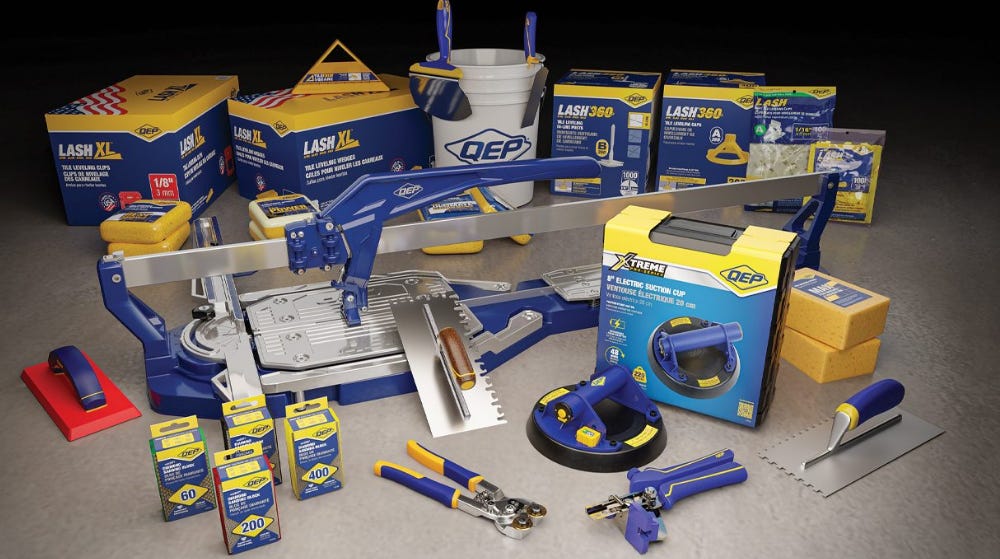
QEP makes flooring tools for contractors and DIYers. The company has been a major supplier to Home Depot for over 40 years and supplies everything from tile spacers, to trowels, to grout cleaning sponges and grout floats. QEP also makes tile nippers, leveling kits, and tile cutters. Some investors think these types of opportunities are boring. Yet well run companies like QEP get overlooked all the time and can turn into “multi-baggers” for patient investors.
In my previous writeup on QEP, I wrote, “To find a company with a sustainable return on equity over 20% at a 7.4x P/E multiple and 4x EV/EBITDA is rare and I believe QEP’s new “normalized earning power” will be at least $5 per share due to the strategic divestitures previously mentioned.”
For fiscal year 2025, QEP reported $4.95 per share in EPS. QEP currently has about $11 per share in net cash, which is more than a quarter of the entire market cap. The stock closed at $41.35 on January 30th, 2026.
I recently added to my position and wanted to take a second look at the company.
The stock price hasn’t moved much since I first wrote about it, and I believe the market still hasn’t fully appreciated the strategic moves the company has made over the last few years to enhance shareholder value.
I believe QEP is still undervalued and my conviction in the company has grown stronger since first looking at it. QEP is currently priced at a roughly 6x cash-adjusted P/E ratio, and roughly 4.9x EV/EBIT.
QEP is a Top-Notch Capital Allocator which is Rare to Find in Microcap Stocks
QEP is family owned and operated - QEP’s founder and chairman Lewis Gould owns nearly 50% of the company, and his son Leonard Gould is currently the CEO.
Insiders with high ownership stakes are more likely to make decisions that create value for shareholders, since they are owner’s themselves and not just hired guns with high salaries and small amounts of stock.
Many management teams will say their goal is to maximize shareholder value, but few actually take the actions necessary to do it. This makes sense since most managers who have high salaries and little stock ownership are not always incentivized to make the necessary decisions to increase the value for the shareholders.
Even stock option packages do not fully align executive teams with shareholders. While options are often intended to incentivize long-term value creation, they can also dilute existing shareholders and introduce misaligned incentives. In many cases, stock options function like call options for management teams: executives participate meaningfully in the upside if the stock performs well, but bear relatively little downside risk if the business underperforms or fails. This payoff structure can encourage risk-taking that benefits management in favorable outcomes while leaving shareholders exposed to dilution and capital loss.
QEP is different - QEP’s capital allocation over the last few years has been superb and they are acting the way a shrewd business owner would. As I’ll explain next, QEP’s management team has taken strategic actions over the last few years that have drastically improved QEP’s profit margins and balance sheet strength.
QEP’s Financial Position Has Rapidly Improved but the Market Hasn’t Fully Caught On
Prior to its recent strategic divestitures, QEP’s operating margins were around 3%. Over the last few quarters, operating margins have nearly tripled, with operating margins now exceeding 8%.
Operating margins for fiscal year 2025 were 8.1%. Operating margins for the nine months ended November 30th, 2025, were 8.3%. Moreover, gross margins that were previously in the mid to high 20’s have now increased to the mid 30’s.
In the sections that follow, I’ll examine the specific decisions QEP has made and assess their impact on the company’s balance sheet, margins, and earnings power, followed by updated return projections and a revised valuation model.
