

Shoe Station Group (NASDAQ: SHOE), formerly known as Shoe Carnival, is a footwear retailer headquartered in Fort Mill, SC. Shoe Station is the type of retail turnaround I find interesting because the balance sheet is very strong and the investment thesis doesn’t require a lot of things to go right to realize a successful investment outcome. If future results are merely better than feared, I believe there is a lot of upside from current prices.
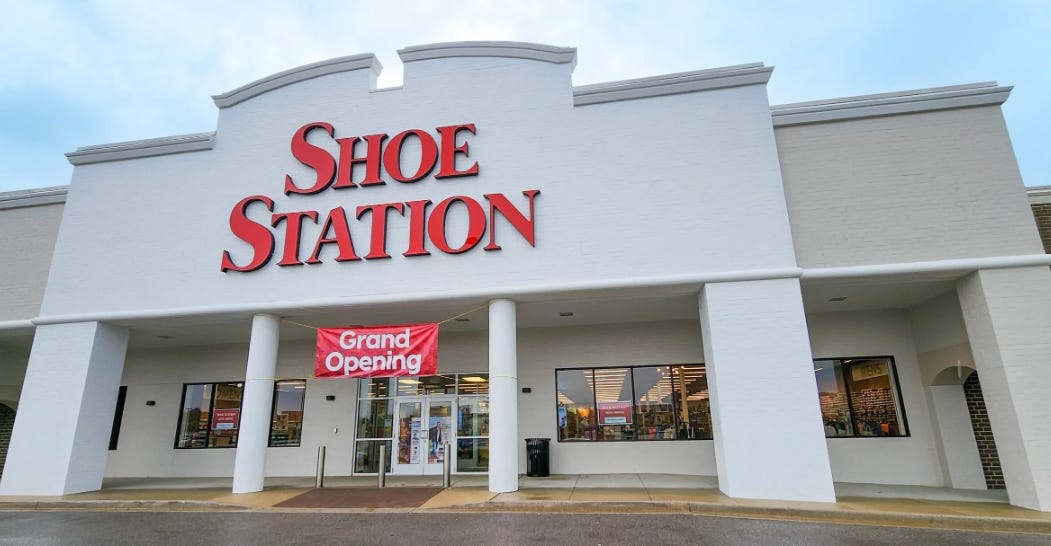
Shoe Station has made some strategic mistakes over the past couple of years. Comparable sales have declined, an aggressive store conversion program failed to produce the expected results, the CEO departed, and the new management team has substantially reversed the previous strategy.
Yet the balance sheet remains exceptionally strong as Shoe Station has no debt and a robust cash position. Shoe Station has roughly $129.3 million in cash and investments ($4.76 per share), which equates to about 36% of the entire market cap. Moreover, Shoe Station expects to release another $50–65 million from inventory during the current fiscal year. Plus, the CFO (who has been with the company for nearly 30 years and recently returned) purchased $500K of stock in the open market back in April.
At approximately $13.38 per share and 27.2 million shares outstanding, the market capitalization is only about $363.2 million.
The company is also expected to earn $1.40–$1.60 per share this year despite significant inventory markdowns and restructuring activity. Meanwhile, shareholders collect a $0.68 annual dividend, representing a yield of roughly 5%. I believe the dividend is relatively safe because the payout ratio is only about 45% (2.2x coverage) even in a year of depressed earnings. Obviously, this could change but this is a company that has raised its annual dividend every year for the last 12 years.
I believe 2026 is a trough earnings year due to one-time, non-recurring expenses and inventory liquidation. For some historical context, Shoe Station’s average EPS over the last 10 years has been $2.50 per share. At current prices, Shoe Station is trading at roughly 3.5x cash adjusted price to average 10-year EPS. That’s an incredibly cheap multiple for a debt free company. Shoe Station also trades at a discount to working capital (current assets - current liabilities), which is about $16.29 per share.
What Has Gone Wrong?
Shoe Carnival acquired Shoe Station in 2021 when Shoe Station had just 21 locations. Shoe Station subsequently performed much better than the legacy Shoe Carnival banner. By fiscal 2025, Shoe Station sales had increased 2.7%, while Shoe Carnival sales declined 7.7%.
The company decided to pursue an aggressive strategy to convert Shoe Carnival locations into the Shoe Station format. It converted 101 stores during fiscal 2025 and initially planned to convert most of the chain over the next several years.
Management believed Shoe Station’s premium assortment, higher-income customer base and lower inventory requirements represented the future of the company. Shoe Station requires 25 – 30% less inventory than Shoe Carnival, according to management.
At one point, the plan called for more than 90% of the store fleet to eventually operate under the Shoe Station banner. Unfortunately, management’s plan to shift almost exclusively to the Shoe Station brand hasn’t gone according to plan.
Converted stores produced significant variability in sales performance. Some worked well, but others didn’t come close to meeting expectations.
Management assumed that putting the Shoe Station assortment into a former Shoe Carnival location would attract the Shoe Station customer. But many of these shopping centers were in markets where that customer simply didn’t exist in sufficient numbers.
It was an expensive mistake. Fiscal 2025 operating income was reduced by approximately $24 million from rebanner-related investments, while the company spent another $37 million of capital expenditures supporting the initiative.
A Strategic Change in Direction
The previous CEO Mark Worden departed in February, and former CEO Cliff Sifford returned on an interim basis.
Sifford’s strategic review resulted in an important conclusion: Shoe Carnival and Shoe Station should remain separate concepts.
Management now believes only a limited number of additional Shoe Carnival locations make sense for conversion. Instead, Shoe Station will grow primarily through new stores in areas where demographics already match its higher-income customer base.
Meanwhile, 12–14 underperforming stores are expected to close this year, followed by another 6–10 next year. I view this reversal favorably. I’d rather see management acknowledge that $60 million was poorly spent than spend another $100 million trying to prove the original strategy was right.
The turnaround has therefore become much simpler: fix the merchandise assortment, close unprofitable stores, reduce expenses, normalize inventory and selectively grow Shoe Station where the concept has already demonstrated that it works.
Early Signs of Improvement
There is at least some evidence that the changes are beginning to help.
Shoe Carnival’s sales declined only 2.2% during the first quarter, while comparable-store sales fell 1.7%. That’s a meaningful improvement from the mid-to-high-single-digit comparable-sales declines experienced throughout fiscal 2025.
Management believes part of Shoe Carnival’s deterioration was self-inflicted.
The merchandise assortment had drifted toward higher price points, leaving the company underserving the value-oriented families that historically formed its core customer base. Management is now restoring lower opening price points and a more traditional promotional strategy.
Shoe Station itself remains a question mark. Its first-quarter comparable sales declined approximately 2.9%.
Management discovered that converted locations were carrying essentially the same premium assortment as legacy Shoe Station stores even when local demographics were considerably different. The company is now tailoring merchandise at each converted location to its actual trade area. Whether this works should become clearer during the important back-to-school and fall selling periods.
The Inventory Opportunity
Shoe Station’s inventory stood at approximately $440 million at the end of fiscal 2025 and declined to $417 million during the first quarter. Management expects a total reduction of $50–65 million by fiscal year-end.
The inventory reduction temporarily pressures gross margins because excess merchandise is sold at a discount. But this inventory liquidation positively affects cash flow. Inventory sitting on a shelf represents cash already spent. Selling the merchandise without replacing all of it releases that working capital.
A $50–65 million inventory reduction is enormous relative to Shoe Station’s approximately $363.2 million market capitalization—equivalent to roughly 14–18% of the company’s equity value. This is one reason current EPS may somewhat understate the economics of the turnaround.
A Fortified Balance Sheet
For most retail turnaround situations, I would usually pass. Shoe Station is different because of its strong balance sheet. Shoe Station finished the first quarter with approximately $129 million in cash and marketable securities and no funded debt.
That’s roughly $4.75 per share of cash and securities against a $13.38 share price.
The balance sheet gives management considerable time to work through the turnaround without worrying about refinancing debt or raising capital.
It also supports the dividend.
The current annual dividend of $0.68 represents approximately a 5% yield and requires only about $18.5 million annually. Against management’s $1.40–$1.60 adjusted EPS guidance, the payout ratio is approximately 43–49%.
Management even increased the quarterly dividend 13% this year and repurchased roughly 390,000 shares during Q1.
The Shorts Are Piling In
The short interest is another interesting aspect to the Shoe Station story.
As of August 14, approximately 6.63 million shares were sold short, equivalent to roughly 37% of the 17.8 million-share float. That’s up from just 4.24 million shares a month earlier.
The shorts may ultimately be correct: perhaps Shoe Carnival is experiencing secular decline, Shoe Station can’t generate sustainable growth and today’s earnings aren’t a trough. But the high short interest creates an interesting catalyst if the turnaround begins working.
With insiders owning roughly one-third of the company and only around 18 million shares in the public float, 6.6 million shares represent an enormous future short covering requirement. A strong back-to-school quarter could therefore produce a disproportionately large market reaction.
Valuation
At $13.38, Shoe Station trades for roughly 5.7x cash-adjusted P/E, assuming the midpoint of FY2026 adjusted EPS guidance.
I think normalized earnings could eventually recover to around $2.00–$2.25 per share if management merely stabilizes sales, eliminates restructuring costs and restores some margin.
Put an average 10–12x multiple on those earnings and the shares could be worth approximately $20–27, which implies about 42 - 92% upside. A stronger turnaround producing $2.50 of EPS could support a value around $30.
I should emphasize that even though Shoe Station has a rock-solid balance sheet, there are still risks. Retail turnarounds frequently fail and it’s entirely possible that Shoe Station’s earnings slowly fade over time. Even if this were to happen, the downside should be mitigated somewhat. My rough liquidation analysis suggests the hard downside could be somewhere around the high-single-digits per share depending heavily on inventory recoveries and lease termination costs.
At current prices, investors are paying roughly $13.38 for a debt-free company with substantial liquidity, insider buying, a 5% dividend, inventory that is being converted into cash and several identifiable opportunities to improve profitability.
For paid subscribers, I walk through my estimate of Shoe Station’s normalized earnings, liquidation value, probability-weighted returns, position sizing, and why the unusually large short position could become an important catalyst if the turnaround gains traction.
